How to calculate concrete blocks
Wall area = length × height − openings
Blocks = wall area × 1.125 (for 8 × 16 in blocks)
To buy = blocks × 1.05
Mortar = blocks ÷ 13, at least
Example: a garden wall 20 ft long and 6 ft high.
- Wall area: 20 × 6 = 120 sq ft
- Blocks laid: 120 × 1.125 = 135
- With 5% for breakage: 141.75, so 142 blocks
- Mortar: 135 ÷ 13 = 10.4, so at least 11 bags of 80 lb mortar mix
- Courses: 6 ft is 72 in, or 9 courses of 8 in
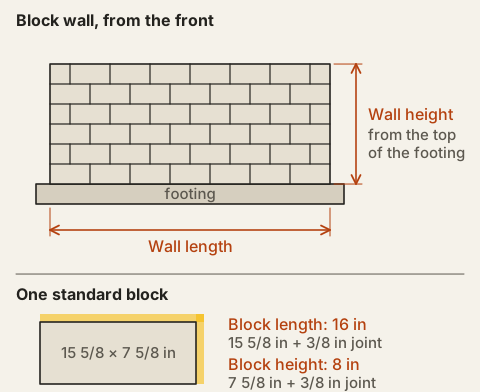
Where 1.125 comes from
A standard block measures 15 5/8 × 7 5/8 in on its face. With a 3/8 in mortar joint it takes up 16 × 8 in, which is 128 square inches, and a square foot is 144 square inches: 144 ÷ 128 = 1.125 blocks per square foot. CMHA, the concrete masonry industry’s association, adds 5% for waste and breakage, which gives its figure of 119 blocks per 100 sq ft.
The width of the block doesn’t change the count: CMHA notes the method works whatever the unit’s width, since thinner and thicker blocks share the same face. Corner, bond beam and other special blocks are counted the same way; CMHA suggests working them out separately and taking them off the total.
Mortar is a minimum
Quikrete rates an 80 lb bag of its Mason Mix at up to 13 standard blocks, so the calculator’s bag count is the least you’ll use. CMHA notes that how far mortar goes depends on the mason, non-modular layouts and how many returns and corners the wall has, so plan on more than the minimum.
What’s not covered
Grout, rebar and footings. Which cores are filled, where the steel goes and how big the footing is depend on the wall’s height, what it holds back and your local code. Ask your building department or a structural engineer. Once the footing is designed, the concrete calculator gives its concrete.