How to calculate pool volume
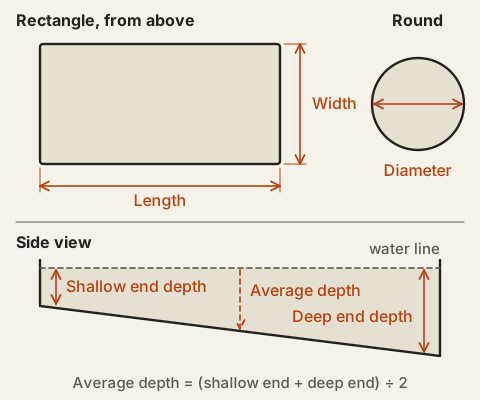
Average depth = (shallow end + deep end) ÷ 2
Rectangle: length × width × average depth × 7.48
Round: π × (diameter ÷ 2)² × depth × 7.48
Oval: [(length − width) × width + π × (width ÷ 2)²] × average depth × 7.48
Example: a 16 × 32 ft pool, 3.5 ft deep at the shallow end and 8 ft at the deep end.
- Average depth: (3.5 + 8) ÷ 2 = 5.75 ft
- Volume: 16 × 32 × 5.75 = 2,944 cubic feet
- Gallons: 2,944 × 7.4805 = 22,023 gallons, or 83,365 liters
Where 7.48 comes from
A US gallon is exactly 231 cubic inches (NIST), and a cubic foot is 1,728 cubic inches, so a cubic foot holds 1,728 ÷ 231 = 7.4805 gallons. In metric it’s simpler: a cubic meter is 1,000 liters, and a US gallon is 3.785 liters.
Round and oval pools
A round pool’s surface is π times the radius squared. Pool guides often use a shortcut of 5.9 for round pools, which is the same math rounded: π ÷ 4 × 7.48 = 5.875. The calculator uses the exact shape.
The oval here is the common pool shape with two straight sides and half-circle ends: a rectangle as long as the straight part plus a circle as wide as the pool. A 15 × 30 ft oval is (30 − 15) × 15 + π × 7.5² = 401.7 sq ft, so at 4 ft deep it holds about 12,020 gallons. For a kidney or free-form pool, use the surface area from the plans and pick “Known area”.
What’s not covered
Chlorine, salt and shock doses are left out on purpose: they depend on the product and your water test. Follow the label or ask a pool professional, who will want the gallons from this page. To check the area around the pool for pavers or a slab, the paver calculator and concrete calculator work from the same measurements.